
Hart County Bench Warrants Explained
A bench warrant is a custody order a judge signs, usually inside a case already open. A missed hearing, a broken court order, or a failure to respond treated as a default can trigger one. Once signed, it tells officers to bring the person before the judge who issued it. The court, not the police, keeps control of the case and any recall.
In Hart County, the follow-through depends on which court holds the file. A missed traffic date can bring a local court response plus a separate Georgia Department of Driver Services failure-to-appear process. A missed Superior Court setting may show on the criminal docket. City ordinance and traffic cases stay with the municipal court of that city. The exact court matters because its judge controls the warrant, the hearing, and any recall. Georgia’s confirmed local terms are “bench warrant” and “failure to appear,” not “capias pro fine.”
Hart Magistrate Warrant Hearings
For official word on how warrants get issued locally, the Hart County Magistrate Court lays it out. Its judges write both misdemeanor and felony warrants. First appearances, pre-warrant hearings, and bond hearings all run through this court. Judges stay on call around the clock for criminal matters, though the public office keeps Monday through Friday, 8:00 a.m. to 5:00 p.m. hours.
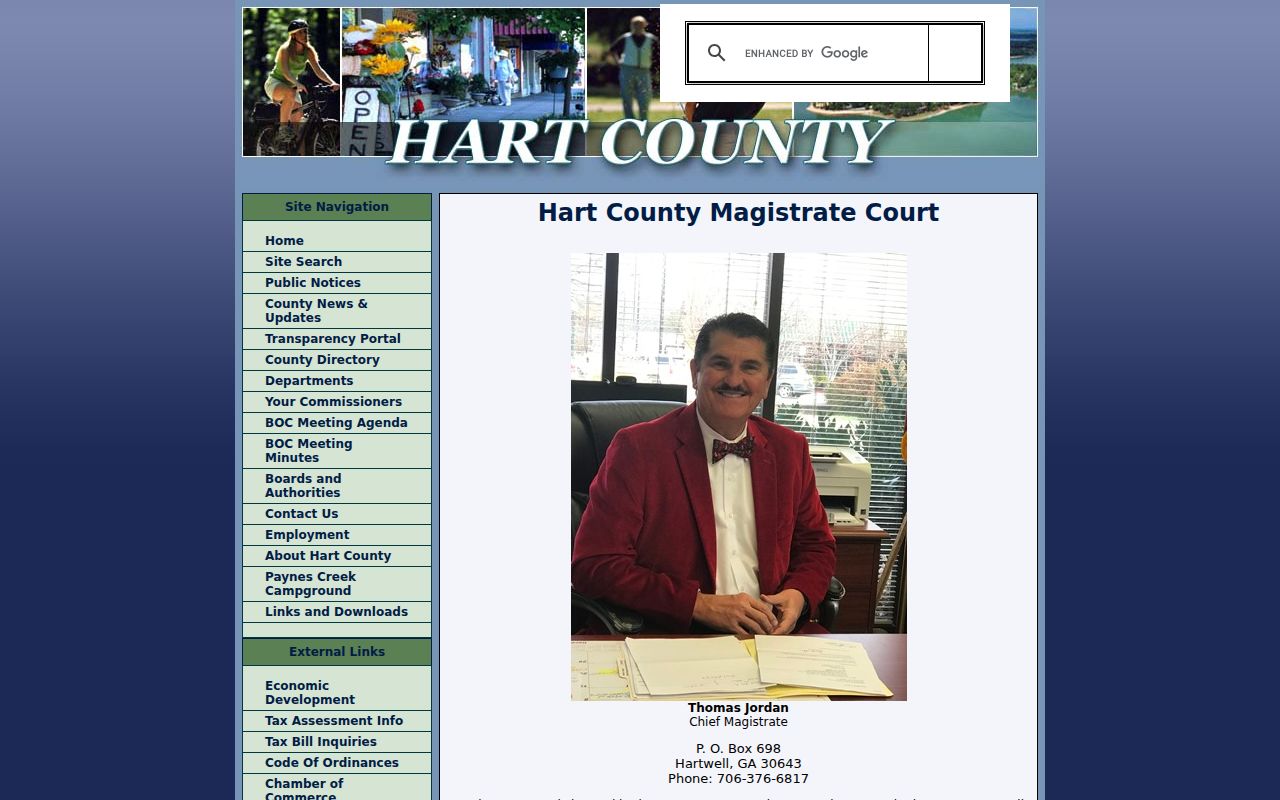
Round-the-clock judicial duty is not a 24-hour public warrant counter in Hart County. Call 706-376-6817 before you drive over, and ask whether Magistrate Court holds the case.
How Hart County Bench Warrants Are Issued
A bench warrant starts with a court event, not a public list. The docket may show notice issued, a required appearance missed, or an order unmet, and then a judge decides whether to enter the warrant. Once issued, it can go out for service and stay open until executed or withdrawn by court authority.
Hart County publishes no universal notice period, grace window, automatic recall rule, or countywide clearing form. A missed date does not always bring the same result. Ask the clerk whether the court entered an FTA, issued a warrant, set a new hearing, or wants you there in person. “Recall” means the court withdraws the warrant; “quash” means the court sets it aside. Neither should be read out of an online payment receipt.
Note: A court’s oral answer should be recorded with the date, case number, and exact status term used.
After Missing Hart County Court
Move quickly, but call before you walk into a Hart County office. Georgia’s warrant guidance warns that a person can be taken into custody the moment a warrant is confirmed in person. A court clerk can explain scheduling and public records, yet cannot give legal advice or promise release.
- Find the citation, summons, bond paper, or hearing notice and identify the named court.
- Call the clerk through an official county or city website and ask whether the case shows an FTA or bench warrant.
- Ask what case number, identification, and documents the court needs.
- Ask whether a new hearing, personal appearance, bond, or lawyer-filed motion is required.
- Confirm the current status with the sheriff if the warrant is held for service.
A case filed in another county belongs to that issuing court. Hart County staff cannot recall another jurisdiction’s warrant.
Bench Warrants and Arrest Warrants Compared
Bench and arrest warrants can both end in custody, but they start differently. Knowing the difference helps a Hart County caller reach the right record holder fast.
| Feature | Bench warrant | Arrest warrant |
|---|---|---|
| Trigger | Missed court duty in an existing case | Probable cause tied to a criminal allegation |
| Issuance | Judge acts from the case docket | Judicial officer reviews an application or affidavit |
| Key record | Docket entry, FTA, or court order | Warrant, affidavit, return, and related case record |
| Next inquiry | New hearing, recall, appearance, or bond | Service, surrender, bond, and first appearance |
A summons is a third thing. It tells a person to appear or respond, and does not itself allow arrest. For the probable-cause side, see the Hart County arrest warrant search.
Hart Superior Bench Warrant Records
A bench-warrant question tied to a felony may belong to the Superior Court of Hart County in the Northern Judicial Circuit. The Clerk of Superior Court keeps its criminal filings. Per the clerk’s official page, most court records are public and may be viewed in the office, with criminal and civil research available through ICON after contact. That vendor route is court-record access, not a live warrant guarantee. The official Superior Court page describes the circuit structure behind those cases.
For a Hart County public docket or filed order, call the Clerk of Superior Court at 706-376-7189. Ask what an entry shows: issuance, service, a new hearing, or recall. Current enforcement status is a separate question for the sheriff or issuing court.
Resolving a Hart County Bench Warrant
Every court handles resolution its own way. Hart County publishes no same-day clearing policy, surrender form, recall fee, or criminal bond schedule that covers all courts. Verify the warrant, the court, and the case number before you pay or appear. A lawyer can tell you whether a motion to recall or quash fits and how to weigh the risk of custody.
- Confirm the warrant with the issuing court and ask for its current date and exact status.
- Ask whether the judge requires a new hearing, a personal appearance, bond, or a filed motion.
- Consult a Georgia lawyer when custody, a criminal charge, or a contested court order is involved.
- Follow only the payment, surrender, or scheduling instructions confirmed by the court.
- Keep the filed order, receipt, or clerk confirmation and verify that the warrant status changed.
Caution: A Hart County bench warrant does not clear merely because a name disappears online or a separate fee is paid.
Hart County Traffic FTA Split
A missed traffic court date in Hart County can set off two separate problems. The court may issue a bench warrant of its own. It may also report the failure to appear to Georgia DDS, which puts the driver’s license at risk. A DDS release fixes only the licensing report. It does not clear the warrant, because only the issuing court can recall one. Hart County Probate Court handles county traffic matters at 706-376-2565. In Royston, call the court clerk at 706-245-6195; the city’s payment portal notes that past-date cases may need clerk contact or authorization first. Canon links a ticket-payment service, though its public materials do not treat that service as a warrant lookup. Hartwell matters go through its municipal court or police court staff. Read the court name printed on the citation before you use any portal.
Note: Payment may carry a guilty-plea effect under portal terms, so confirm the case posture before submitting funds.
Finding the Court That Issued the Warrant
The issuing judge controls the Hart County bench warrant. Match the document, case number, city, and alleged missed date to the court, and start your calls there.
| Possible court | Contact | Ask about |
|---|---|---|
| Magistrate Court | 706-376-6817 | Warrant, first appearance, pre-warrant, or bond record |
| Superior Court Clerk | 706-376-7189 | Criminal docket, bench-warrant entry, filed recall order |
| Probate Court | 706-376-2565 | County traffic citation, FTA, appearance instruction |
| Hartwell municipal | 706-856-3226 | City traffic or ordinance case |
| Royston municipal | 706-245-6195 | Ticket, past date, court setting, payment authority |
| Canon or Bowersville | 706-245-8155 or 706-245-8971 | Correct clerk and issuing court |
The Hart County Sheriff’s Office, 706-376-3114, is the countywide contact for service and routing. It cannot substitute for the issuing judge’s order.
Hart County Bench Warrant Access
A narrow open-records request can ask for an existing docket entry, warrant return, public order, policy, or fee schedule. Court-record requests go to the right clerk. Requests for sheriff service records go to the Hart County Sheriff’s Office. The Georgia Attorney General suggests putting the request in writing to the office that holds the records. The Georgia Open Records Act, O.C.G.A. §§ 50-18-70 et seq., leans toward access but allows exemptions and redactions. Sealed cases, juvenile records, protected identifiers, and active investigative facts may stay out of reach. An agency should hand over available records within three business days, or explain the timetable, cost, and legal basis for anything withheld. A request covers records that already exist. It cannot force staff to build a new warrant-status certificate.
Record tip: Request the case number, issuing court, issue date, filed return or recall order, and status date, subject to lawful redaction.